


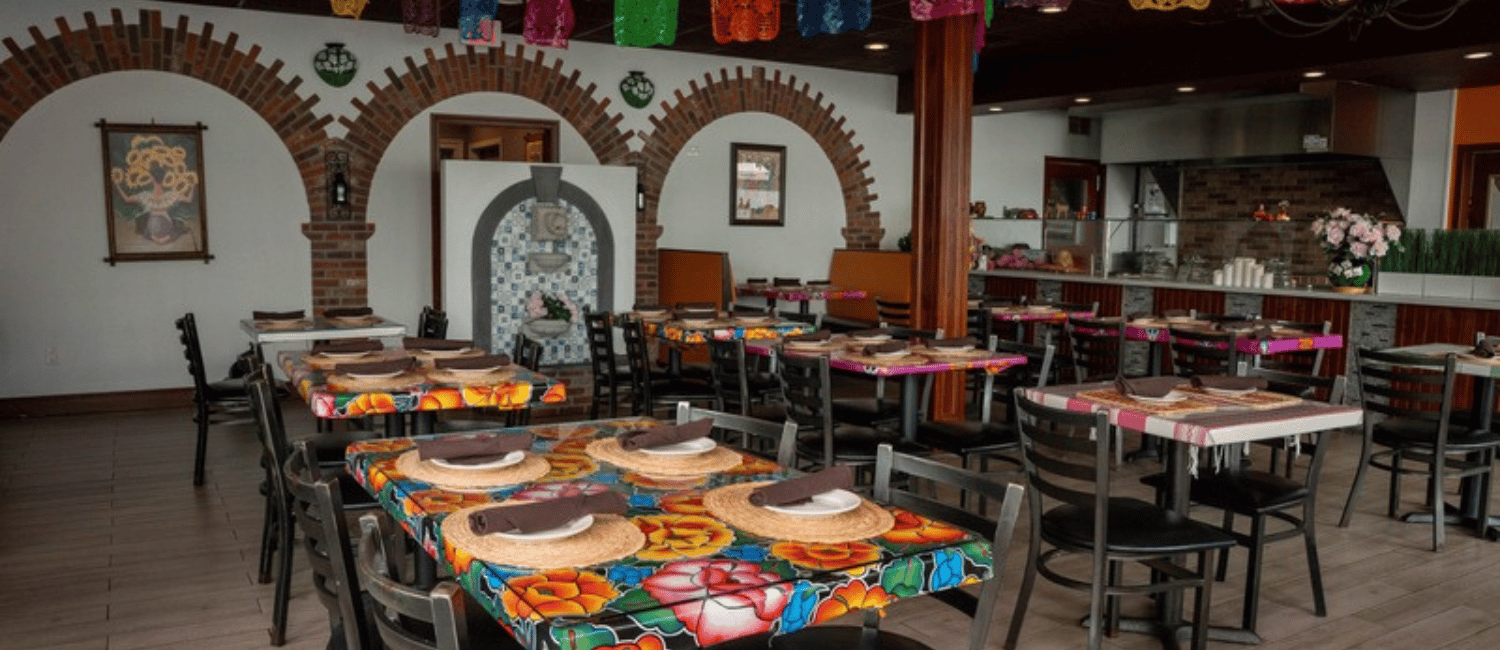
You might think you know all about Mexican food. And sure, given the popularity of food from south of the border, there are plenty of establishments in Connecticut to sample what passes for authentic Mexican cuisine.
Yet, if you haven’t been to Bethel’s Casa Oaxaca, you’re missing the true story – particularly the rich array of handcrafted food that traces its roots to this state in Mexico’s south. Oaxaca is a diverse place with a wide variety of people, landscapes, and yes, food. The owners’ roots in Oaxaca have combined to make this relatively young establishment a standout along Bethel’s busy Stony Hill Road corridor.
The Bernabe family owns and operates Casa Oaxaca along with Danbury’s La Mexicana Bakery and an adjoining food market of the same name. The Bernabes opened Casa Oaxaca in late 2021. The timing of that opening proved fortunate: Its predecessor – 123, Let’s Eat! – specialized in fast Tex-Mex and stayed open for less than two years. In their relaunch after the worst of the Covid pandemic was over, the Bernabes set out to make Oaxaca truly stand out.
“We wanted Casa Oaxaca to be something completely different,” said Yesenia Bernabe, who along with sister Thalia is charged with running the now five-year old restaurant. “We deliberately decided to make our new restaurant much more traditional to our home state, Oaxaca. In doing that we also wanted it to reflect who we are as a family and as a culture.”
The Bernabe sisters were both born in Danbury, grew up in Bethel, and graduated from Bethel High School. Their parents, Plutarco and Edith Bernabe, emigrated from Oaxaca, Mexico – the state in the extreme south of Mexico that lends La Oaxaca its moniker.
For the unfamiliar, a geography lesson is in order. Oaxaca state sits in the extreme south of Mexico, just south of the more populous state of Puebla. It’s about 300 miles south of Mexico City or about 1,000 miles from the U.S. border. Here, the map of Mexico turns eastward and the land narrows to a mere 137 miles at the Isthmus of Tehuantepec.
While it has grown in recent decades as bustling tourist towns have sprung up along the Pacific coast, about half of Oaxaca’s population is considered indigenous to the Americas. Three rugged mountain ranges have helped to preserve a wide array of those ethnic identities.
Oaxaca is also widely regarded as the gastronomic capital of Mexico. It is the culinary home of “the seven moles” – the rich, piquant sauces that characterize the dishes of Mexico’s south. Four moles are featured on Casa Oaxaca’s menu. But there’s a lot more to the cuisine of the region and you get a sense of that from the moment you take your seat.

“We make all of our food in the traditional Oaxacan way: by hand,” noted Bernabe. “When most people think of ‘Mexican food’ they picture tacos, burritos, guacamole.” There’s that here as well, but everything is prepared in a traditional manner and with different flavorings, while the menu provides much more for the guest to explore.
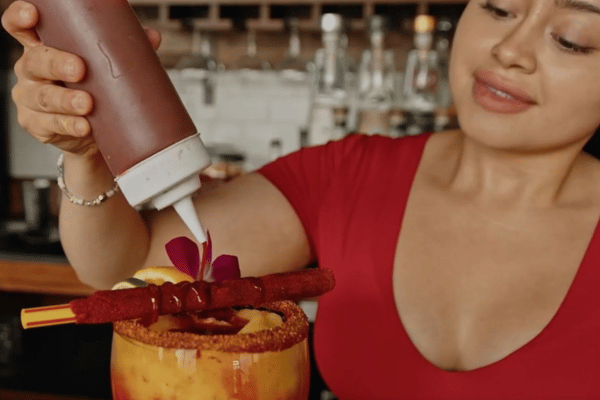
For starters, you’ll be invited to sample a tall glass of agua fresca. To label these waters “fresh” is an oversimplification, as Casa Oaxaca employs an exacting purification process that begins with boiling and then cooling the water that will later be flavored and served. Here, aguas frescas incorporate ingredients such as hibiscus, tamarind, and horchata, a combination of cinnamon and rice.
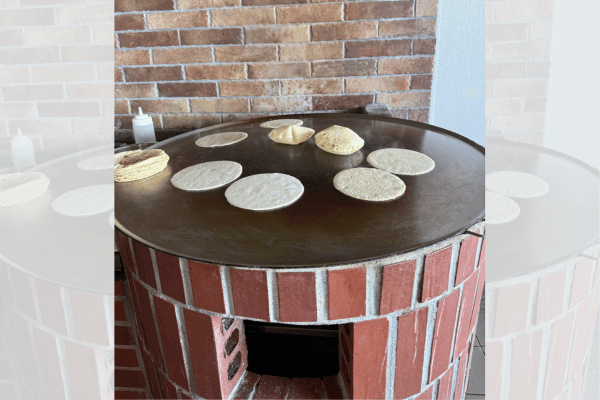
A truly authentic part of the experience takes place right in front of diners where a chef prepares fresh tortillas and sauces on a comal. This is a small griddle made from clay or cast iron that stars in the street cuisine prevalent in all parts of Mexico. These cooking surfaces also are widely used in Mexican households, said Bernabe.
Comal isn’t a Spanish term; it instead traces its roots to the Aztecs and other indigenous cultures of the region. It functions well in charring the chiles, tomatoes, and tortillas elemental to Oaxacan dishes, as well as for pan-roasting spices, seeds and nuts. Putting the comal front and center in a dining spot is a form of welcome, Bernabe said.
“At Casa Oaxaca our food comes from the heart and the home,” said Bernabe. “Besides tortillas, we use the comal in the smoking of chiles. We’ll usually begin our preparations at 5 a.m. It’s a long, involving process. It can take hours to produce what we need for an evening’s guests.”
All the tortillas are crafted by hand from scratch - – “lovingly!” proclaimed Bernabe. “There also are no additives or preservatives as might be found in commercially produced tortillas,” she said.
Having tortillas prepared right in the front of the restaurant, on a wood-fired comal, provides an added ingredient of entertainment. “We often get asked, ‘what is the lady making?” noted Berube. “If you watch carefully, you’ll see the whole process!”
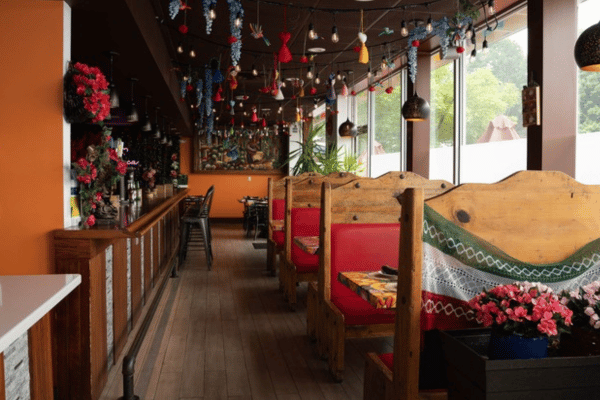
When you visit on Friday, you’ll also hear a mariachi band that performs from 6 to 9 p.m. An earlier “Happy Hour” – from 3 to 6 p.m. – has become quite popular, and some of those patrons remain for dinner. Another popular draw is Taco Tuesday, with the restaurant’s chef and comal lending authentic Oaxacan flavors to this popular Mexican treat, besides giving patrons a visual show.
You’ll want to begin your meal with some of the restaurant’s para comenzar dishes – which translates to “to start.” All are designed for easy sharing by patrons. Cilantro takes center stage in most dishes in Oaxaca and is evident in Casa Oaxaca’s tray of taquitos, miniature fried tacos filled with chicken, topped with a cilantro-cream sauce and served with a dollop of guacamole and pico de gallo – the latter a well-known regional garnish consisting of chopped tomatoes, onions, peppers.
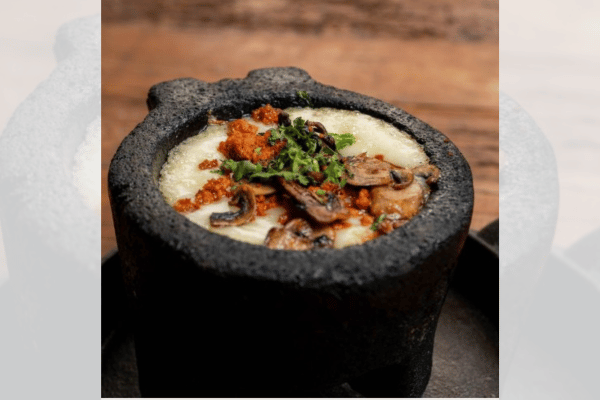
Another popular favorite is queso fundido, a mélange of chihuahua cheese, mushrooms and chorizo sausage also topped with cilantro-cream sauce. It comes in an earthenware bowl with fresh corn tortillas on the side for dipping. If you want lighter fare, try a soup such as pozole, a chowder made with hominy and chicken and garnished with lettuce, radishes and limes.
But leave plenty of room for your main course! Four of the aforementioned moles appear on Casa Oaxaca’s menu – two as standard menu items and two more among the specials the restaurant frequently dishes up.
“Our number-one mole is mole negro, which incorporates a variety of spices as well as fine chocolate,” said Bernabe. To the uninitiated, this rich chocolate-based sauce is quite different than the Tex-Mex cuisine most people associate with Mexican food. It is evident in one of the restaurant’s signature dishes, Mole Oaxaca, which consists of a generous helping of boneless chicken topped with mole sauce and sesame seeds.
A close runner-up in popularity is red mole, a tomato-based sauce incorporated into Casa Oaxaca’s popular enchiladas. The color is derived from the use of different dried peppers. Patrons can choose chicken- or cheese-based enchiladas, Bernabe pointed out.
“We don’t have green mole as a standard item on our menu, but we do use it in many of our specials,” said Bernabe, “particularly those served in the fall and winter. Green mole is prepared with green tomatoes. A fourth mole we use is served only in the fall and is flavored with almonds and olives.”
Mole recipes are used in chicken and pork recipes, Bernabe explained, because that is how they appear in dishes native to Oaxaca and the rest of Mexico. “Beef and seafood typically do not appear in mole dishes in Mexico,” she said.
Nonetheless, birria is a recurring item in other dishes on the Casa Oaxaca menu. This is a heavily spiced, soup-like meat that can be served as an ingredient in other dishes or served in its own broth along with sides of rice and beans.
Molotes are a special item the restaurant often serves up to meet popular demand. These are dumplings crafted from a mixture of shredded potatoes and corn meal and filled with beef, chorizo sausage, and cheese. These are considered one of the signature dishes of Oaxaca state. Watching the chef prepare them on the comal has made them even more popular, Bernabe said.
“Our guests will say, ‘what’s that?’ When we tell them, they’ll order lots of them for their meals,” said Bernabe. “We even get callers asking whether we’re serving them on a particular night.”
One regional original is Molcajete Oaxaca. In a truly authentic touch, this comes served inside a Mexican volcanic rock or “molcajete.” It blends tasajo (a dried Mexican beef), chicken, shrimp, fried cheese, chorizo, carne enchilada, jalapeno, grilled cactus, onion and roasted tomatillo sauce. Casa Oaxaca’s take on the more standard carne asada incorporates ribeye steak, jalapenos, fried chiles, and pico de gallo and is served with rice and beans.
“In everything we make, we only use natural ingredients free from preservatives or additives,” said Bernabe. “Our supplier is a Mexican-American company that imports all our ingredients straight from Mexico. We want everything to be as authentic as it can be.”
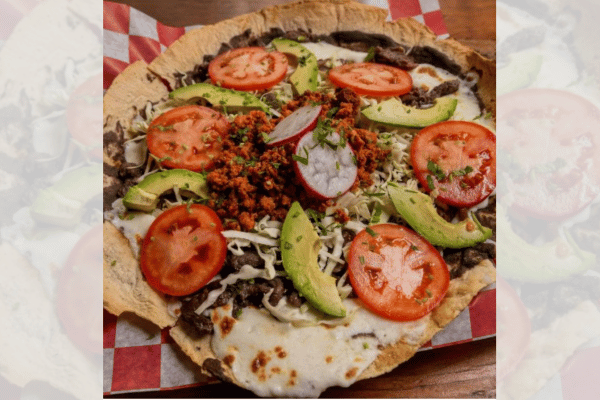
The menu is extensive and even encompasses a Mexican pizza. At its base is a flat, round corn tortilla topped with bean paste, pork, cabbage, and other meats of the customer’s choosing. In fact, you’ll want to return often to sample all that Casa Oaxaca has to offer. What’s more, because the Bernabe family also owns a bakery, you can always be sure to find plenty of sweet, regional treats on the dessert menu.
Visit Casa Oaxaca at 68 Stony Hill Road in Bethel. It’s open Monday through Thursday from 11:30 a.m. to 9:30 p.m. and on Fridays and Saturdays from 11:30 a.m. to 10:30 p.m. Sunday hours are 11:30 a.m. to 8 p.m. To reach Casa Oaxaca by phone the number is (203) 616-5567. On the web go to www.mycasaoaxaca.com.


060324.png)


.png)
.png)
.png)
