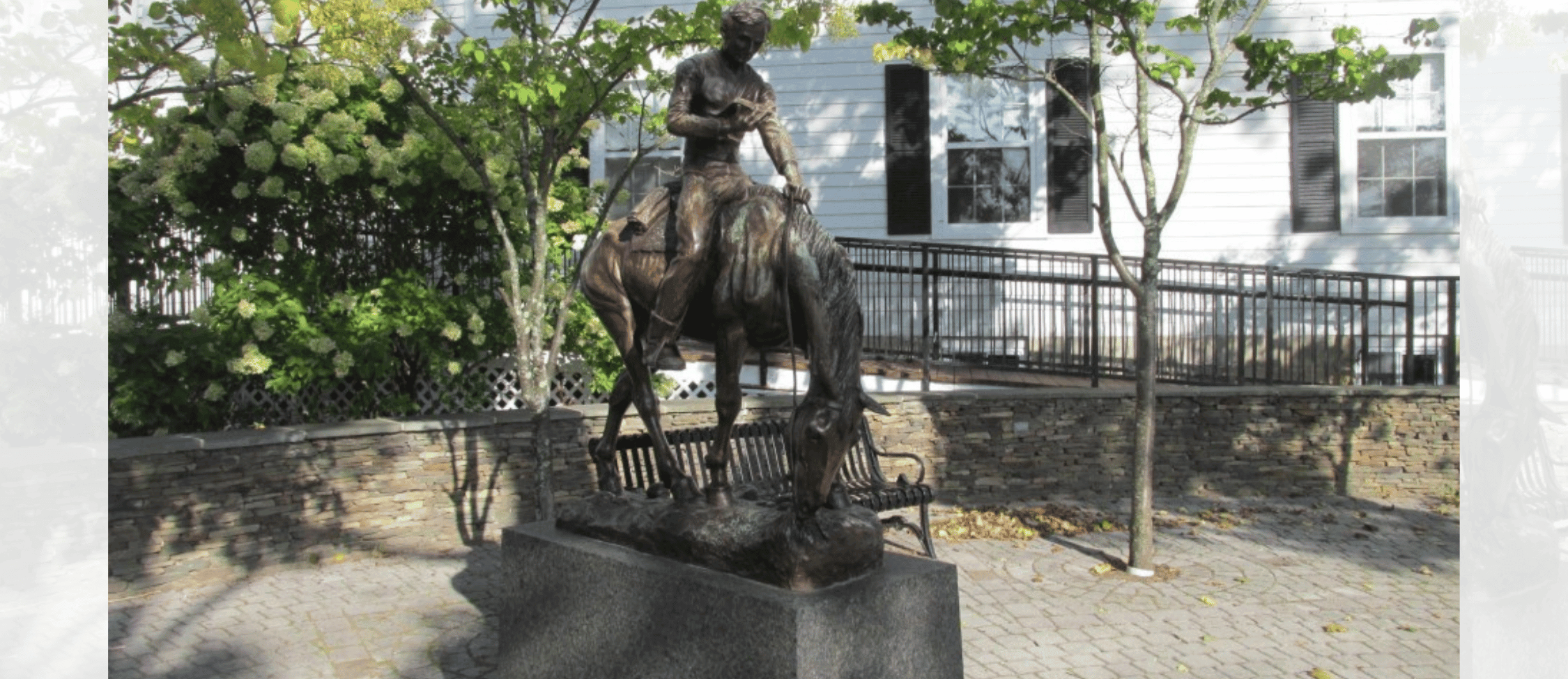
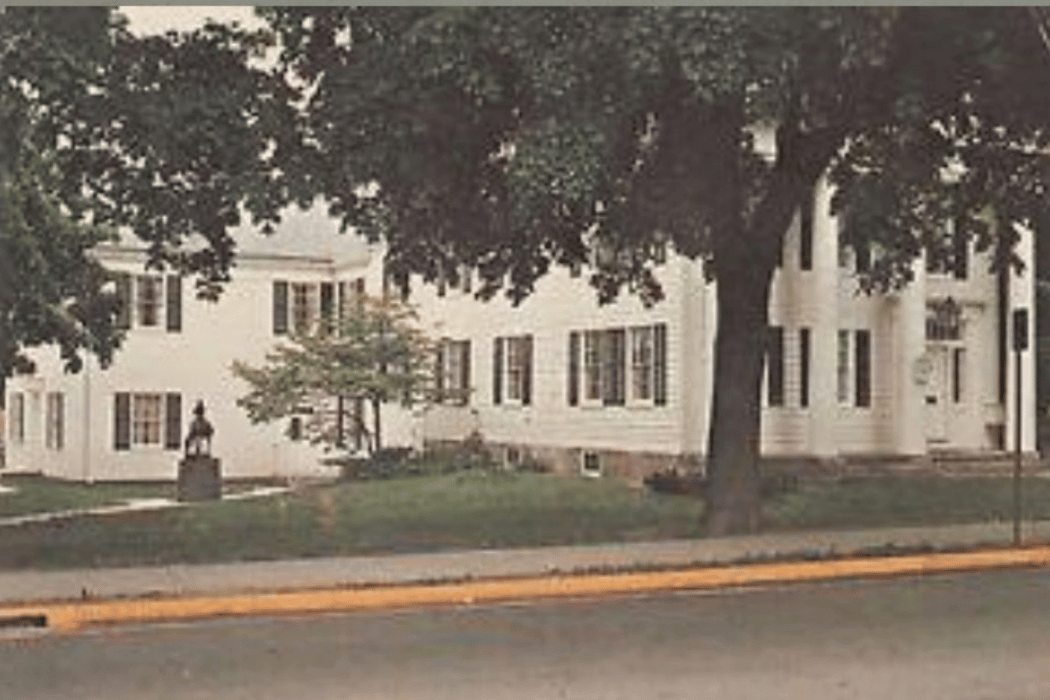
For more than a century, the Bethel Public Library has graced the town center, challenging residents to “be curious, be enlightened, and be inspired.” It’s only fitting, then, that the entrance to this historic columned building features a statue of America’s 16th president, Abraham Lincoln, on horseback and enjoying a book.
The large bronze sculpture, entitled “On the Circuit,” was a gift from sculptor Anna Hyatt Huntington and was dedicated to the town and the library on April 2, 1967. The ceremony also marked the opening of a new wing at the library’s historic Seth Seelye building, a former residence built by a local merchant in 1842.
A prolific and world-renowned sculptor, Anna Hyatt Huntington was also the wife of Archer M. Huntington, a leading philanthropist and scholar whose family had made a fortune in railroads and shipbuilding. The Huntington estate on Sunset Hill Road was called “Stanerigg,” and later became Collis P. Huntington State Park – named for Archer Huntington’s father.
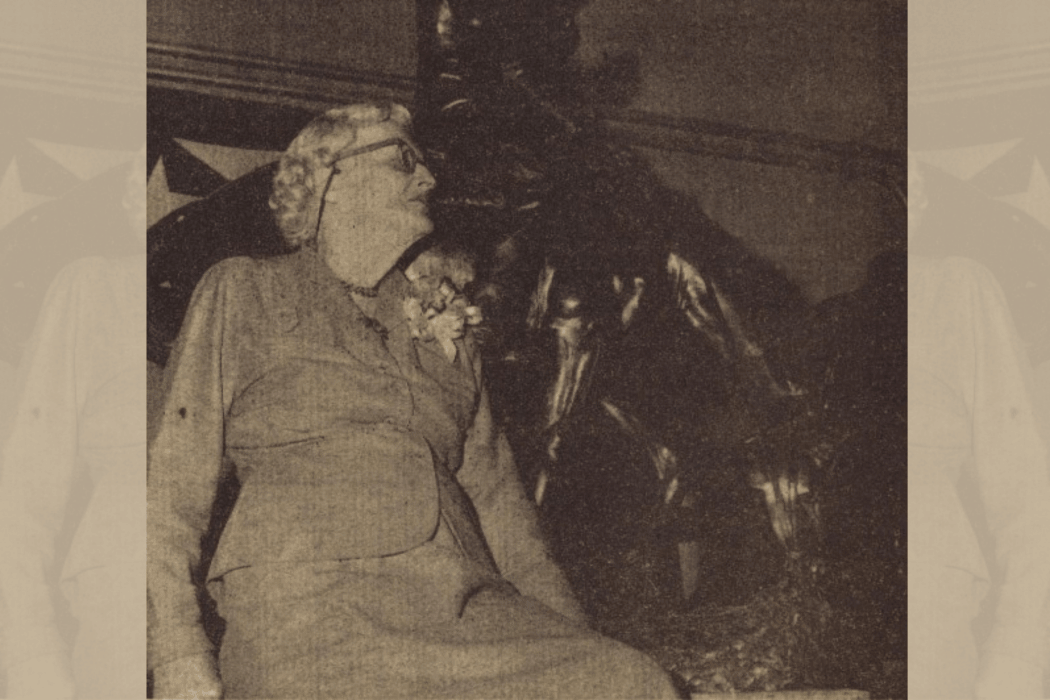
Locally, several of Huntington’s other works adorn the entrances to the park, the Danbury Public Library, and the Mark Twain Library in Redding.
Standing six feet tall, the Bethel library’s statue was one of six of Huntington’s works that were identical in design but cast in varying sizes. A five- and one-half-foot version of her equestrian sculpture, “The Torchbearers,” is outside Redding’s Mark Twain Library. Several smaller works are at the town’s elementary and middle schools.
“Anna Hyatt Huntington was a true philanthropist who donated money and a large volume of work to a wide range of organizations and places, including some very close by,” noted Bethel Town Historian Patrick Wild. Several donations still have regional significance: For instance, Huntington’s generosity led to the 1963 opening of Huntington Hall, the main building of the Danbury Museum and Historical Society.
“Here in Bethel, her fondness for our town was borne out in a variety of ways,” said Wild. “For instance, her estate extended into Bethel but was mainly in Redding. But she was quoted in the Bethel Home News as saying that she had a Bethel post office box and considered it her true hometown.”
Another example of her hometown generosity took place in the early 1970s, when the one-room Plumtrees schoolhouse closed. “Anna Huntington provided the funding that enabled it to become the town’s first well-child clinic,” Wild said.
Huntington also made sizable donations to the town’s visiting nurses’ association and donated an ambulance to the town’s emergency-response team. Wild attended kindergarten at that Plumtrees schoolhouse and met Huntington well before its closure, when his class took a field trip to Huntington’s nearby studio. He was so impressed with her work that his mother purchased Play-Doh on the way home with which he could practice.
“I ended up not pursuing that as a vocation … but I was voted ‘most artistic’ in my high-school class!” Wild recalled.
Local sculptor Dave Gesualdi also met Huntington during his early years. Gesualdi created the statue of Bethel native and 19th Century showman P.T. Barnum, which graces the other size of the Bethel Library. Gesualdi also sculpted the veterans’ memorial at Bethel’s municipal center.
“Our meeting took place when I was in my teens, in the early 1970s,” Gesualdi said. “My dad was her eye doctor and knew I was interested in sculpture, so he took me to her house to meet her.”
By that time, Anna Huntington had already become one of the preeminent sculptors of the 20th Century. Huntington’s father, Alphaeus Hyatt, was a professor of zoology at MIT and, later, Boston University – a pursuit which inspired a love for animals in his daughter. This is borne out in both “On the Circuit,” “The Torchbearers,” and in the numerous other animal sculptures that figure in her many works.
In her younger years, Huntington studied under John Gutzon de la Mothe Borglum – the sculptor who carved the four presidents who appear on Mount Rushmore in South Dakota. Borglum also carved the head of Robert E. Lee, one of three Confederate generals depicted in relief at Stone Mountain, Georgia.
Huntington’s statue of Joan of Arc, erected in 1915 on Riverside Drive in Manhattan, was a first on two fronts. It was the first such statue by a woman sculptor to be erected in New York City. It also was the first sculptural depiction of a woman from history to occupy a public spot in the city.
Huntington died in October 1973 at the age of 97 and created some of her most-loved masterpieces relatively late in life. The first of her six “On the Circuit” renderings went on display at the 1964 World’s Fair. It was one of four that were 14-feet tall. The rendering at the Bethel Library stands about six and one-half feet tall.
“Our statue is one of the medium-sized ones,” noted Tom Borysiewicz, the Bethel library’s head of reference and technology, who also manages its History Room. “Huntington would create a small figure and then replicate it in larger sizes and in bronze using an engraving machine.”
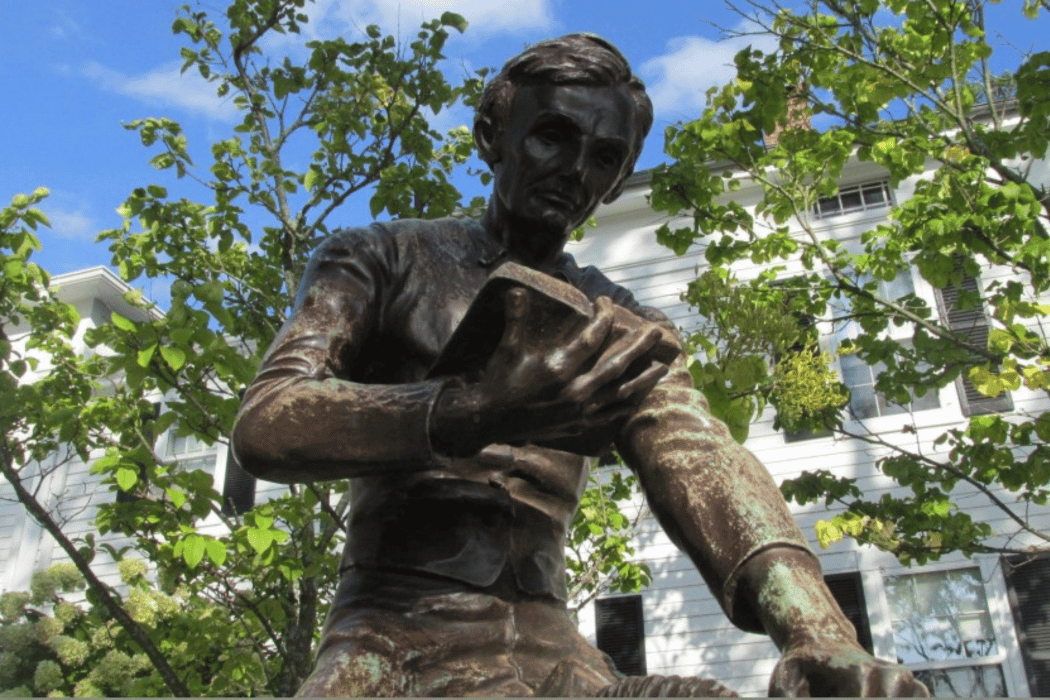
Huntington worked using Italian plasteline for her sculptures. This oil-based clay was good for capturing physical details such as physical and facial expressions and the bones and muscles in animal figures. The finished work was then cast in plaster and later in bronze for the final product. This same reproduction and engraving process was also used to create multiple versions of “The Torch Bearers.”
Borysiewicz noted that Huntington never charged sums of money for her works but instead donated them to settings where they’d be put on prominent display.
“Anna Huntington’s donations were from the kindness of her heart,” Borysiewicz said. “She also wanted to give back to people who provided service. As one story goes, she was having heart palpitations one day and called several area ambulance companies – and Bethel’s ambulance crew was the one that showed up immediately. That is how the ambulance donation came about.”
The 14-foot plaster statue at the World’s Fair no longer exists. It was later recast in bronze, in the same size, and placed at the New Salem Historic Park in Illinois, near the village where Lincoln lived and practiced law as a young man. A second 14-foot version was installed outside Lamont Library at Columbia University.
A third 14-footer went to the city of Lincoln City, Oregon to commemorate its incorporation in 1965. Huntington donated the fourth 14-foot statue to the forestry school at Syracuse University
Shortly thereafter, Huntington donated a fifth casting to the people of Austria; An official from that country had admired the version that appeared at the World’s Fair, and she wanted to return the compliment. At eight feet, it stands a bit taller than the one at Bethel’s library.
The two statues at the Bethel Library are set rather widely apart – a placement Gesualdi described as well-thought-out. “All sculpture needs room to breathe,” he said.
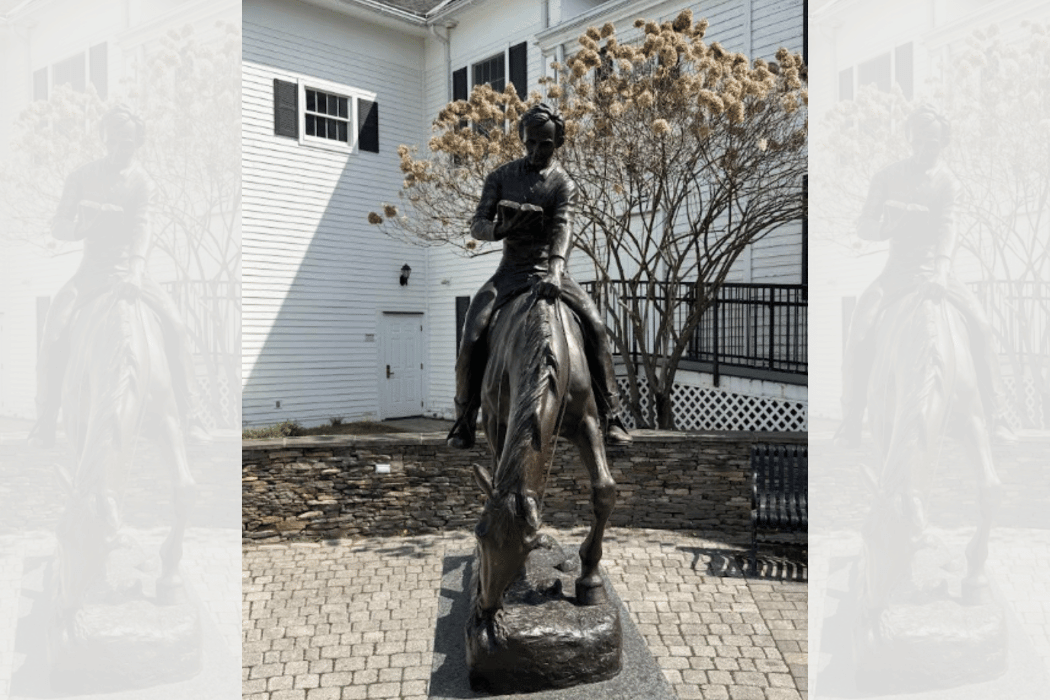
“Neither piece interferes with the other,” continued Gesualdi. “A friend of mine is an art historian who said both Lincoln and his horse are shown doing what they love best – the horse eating the grass, Lincoln reading.”
As a young man, Lincoln was a self-taught lawyer and achieved this by also being a voracious reader. Thus, by capturing one of Lincoln’s signature characteristics, the Bethel Public Library’s statue of Lincoln serves as a permanent reminder of reading’s enduring importance – to today’s patrons and to those who will visit long into the future.


.png)


060324.png)